The short answer
The most dangerous jobs for Victorian children were chimney sweeping and coal mining. Climbing boys could suffocate, fall or burn to death inside chimneys, and child miners faced floods, cave ins and explosions underground. Close behind came scavenging in cotton mills, where small children crawled beneath running machinery, and work in match factories, where white phosphorus fumes caused the bone-destroying disease known as phossy jaw.
Danger was part of almost every job a poor Victorian child could get. Few workplaces had safety rules, machines were rarely fenced, and an injured child could simply be replaced. What set the worst jobs apart was how often children were killed or crippled, and how young they were when they started. Here are the jobs that stood out, and what made each one so deadly.

1. Chimney sweeps (climbing boys)
Many historians rank chimney sweeping as the cruellest job a Victorian child could do. Master sweeps used small boys, and sometimes girls, because only a small child could fit inside a narrow flue. Some started as young as four or five, and masters were known to underfeed them to keep them thin enough to climb.
The first climbs left knees and elbows scraped raw, and some masters rubbed salt water into the wounds to toughen the skin. Children who refused to go up could have straw lit beneath them. Once inside, a climbing boy could get stuck and suffocate, fall down the stack or be burned in a chimney that was still hot. Years of breathing soot caused lung disease and a cancer known as chimney sweeps’ cancer, or “sooty warts”, and few climbing boys reached middle age.
Brushes that could do the job without a child had been available since the early 1800s, yet laws in 1788, 1840 and 1864 were widely ignored. Only after 12 year old George Brewster died in a hospital chimney in 1875 did Parliament require sweeps to be licensed by the police, finally ending the practice.
Read more: Victorian Chimney Sweeps
2. Coal mines: trappers, hurriers and thrusters
Underground, the youngest children worked as trappers. A trapper, often only five or six, sat alone in near total darkness for up to 12 hours, opening a wooden door whenever a coal tub came through so that air kept flowing through the mine. If a trapper fell asleep and the door stayed shut, gas could build up with deadly results. Older children worked as hurriers, dragging loaded tubs through tunnels sometimes less than a metre high with a chain between their legs, or as thrusters, pushing from behind with their hands and heads.

The dangers came from every direction. Roofs collapsed, pits flooded, and gas exploded without warning. Coal dust damaged lungs, constant stooping left children with deformed spines, and working in the dark harmed their eyesight.
In 1838, a storm flooded the Huskar Pit near Barnsley and 26 children drowned, the youngest just seven. The public outcry led to the Royal Commission whose 1842 report, illustrated with drawings of children hauling coal, shocked the country. The Mines Act that followed the same year banned women, girls and boys under 10 from working underground.
Read more: Victorian Child Labour, which covers the coal mines in detail
3. Scavengers in the cotton mills
In the textile mills, the most dangerous job went to the smallest children. Scavengers crawled underneath spinning machines to gather the loose cotton and fluff that collected on the floor. The machines were rarely stopped, so the children worked while heavy moving parts swept back and forth just above their heads. A moment’s carelessness could cost a child fingers, a hand or their life.
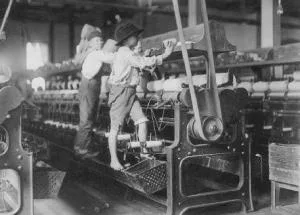
Even away from the machines, the mills were harmful places. The air was hot, damp and thick with cotton dust that caused lifelong lung disease, and the noise left many workers partly deaf. Children worked shifts of 12 to 14 hours, and tired children were more likely to slip. Overseers kept them awake with fines and beatings.
It was not until the Factory Act of 1844 that mill owners were required by law to fence off dangerous machinery.
Read more: Mill Children: Working in Victorian Cotton Mills
4. Match factories and phossy jaw
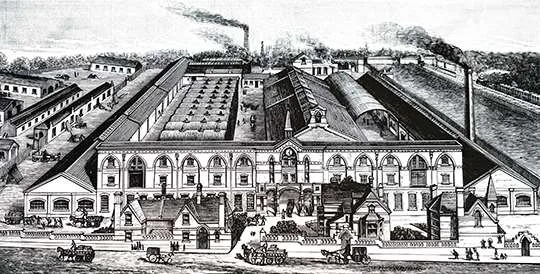
The danger in the match factories was slower but just as terrible. Matches that would strike on any surface were made with white phosphorus, a cheap and highly toxic chemical. Breathing its fumes, especially through rotten teeth, caused phosphorus necrosis of the jaw, known to workers as phossy jaw.
The disease began with toothache and swollen gums, then loose teeth and abscesses, before the jawbone itself started to die. Victims were badly disfigured, and the only treatment was surgery to cut away the dead bone, sometimes the whole jaw. Around one in five people who developed phossy jaw died. At Bryant & May in Bow, where many workers were teenage girls, there was no separate room for meals, so workers ate at the same benches where they handled phosphorus.
Doctors had known about the disease since 1839, but white phosphorus was not banned in Britain until 1910.
Read more: The Matchgirls: Phossy Jaw and the Bryant & May Factory
5. Brickyards and the streets
Some jobs were dangerous less because of sudden accidents than because of the sheer punishment they inflicted on growing bodies. In the brickyards of the Midlands, clay carriers as young as eight balanced 40 to 45 pounds of wet clay on their heads for 13 hours a day, walking up to 14 miles between the clay heap and the moulder. Observers described children so thinly dressed they were almost naked, their hair matted with clay, and completely exhausted by evening. Brickyards escaped the Factory Acts until 1871.
On the streets, children faced a different set of risks. Mudlarks waded into the Thames at low tide, when the river was thick with the city’s sewage, searching the mud for coal, metal and rope to sell. Crossing sweepers, newsboys and flower sellers darted between horse drawn cabs and carts, stood out in all weathers, and were exposed to disease, cold and hunger. Many had no home to return to at night.
Read more: Brickfield Children, Victorian Newspaper Boys and Bootblacks
Why was so much danger tolerated?
To Victorian employers, children were cheap, small and easy to replace. Safety equipment cost money, stopping a machine to clean it lost production, and an injured child could be swapped for another the next morning. Poor families, for their part, often had no choice but to send their children wherever there was work, because every wage helped keep the household out of the workhouse.
Change came slowly and usually only after a public scandal. The Huskar Pit disaster led to the 1842 Mines Act. Decades of campaigning by Lord Shaftesbury and others produced the Factory Acts, including the 1844 law requiring machinery to be fenced. The death of George Brewster ended the climbing boys in 1875, George Smith’s evidence brought brickyards under the law in 1871, and the matchgirls’ strike of 1888 helped keep the spotlight on white phosphorus until it was banned.
Compulsory schooling, introduced from 1880, did as much as any single law to move young children out of dangerous work and into the classroom. For the full timeline of reforms, see our guide to Victorian child labour.
Frequently asked questions
What was the most dangerous job for a Victorian child?
Chimney sweeping is usually considered the most dangerous. Climbing boys risked suffocation, falls and burns, and long-term exposure to soot caused lung disease and cancer. Coal mining was a close second.
How young were children in dangerous jobs?
Some climbing boys started at four or five, and trappers in coal mines could be five or six. Mill scavengers were often among the youngest workers in the factory.
What was phossy jaw?
Phossy jaw was a disease caused by breathing white phosphorus fumes in match factories. It destroyed the bones of the jaw, and around one in five sufferers died.
How many children died in the Huskar Pit disaster?
Twenty six children drowned when the Huskar Pit near Barnsley flooded in 1838. The youngest was seven.
When did dangerous child labour end in Britain?
There was no single date. Laws banned children from underground mining in 1842, required machinery to be fenced in 1844, ended climbing boys in 1875 and banned white phosphorus from 1910, while compulsory schooling from 1880 kept the youngest children out of work.
Sources and further reading
- Victorian Child Labour: What Jobs Did Children Do?
- Victorian Chimney Sweeps
- Durham Mining Museum: Huskar Pit disaster
- legislation.gov.uk: Mines and Collieries Act 1842
- Wikipedia: Phossy jaw
- Wikipedia: Matchgirls’ strike
- Old Mersey Times: George Smith of Coalville and the brickyard children
- Henry Mayhew, London Labour and the London Poor (1851 to 1862)