Child labour was the norm in Victorian Britain. There was nothing like the child protection services we have today, and working children were everywhere. Some started at five or six years old, crawling through coal seams, climbing inside chimneys or picking through Thames mud for anything they could sell.
For poor families, a child’s wage was not pocket money. It could be the difference between paying the rent and ending up in the workhouse. Employers saw children as a cheap, necessary part of the wheels of production, and were happy to take them on because they were small, quick and obedient.
Laws passed over several decades slowly improved working conditions, but change was painfully slow. Real progress only came when campaigners such as Lord Shaftesbury and Thomas Agnew forced the issue.
This guide covers every major job Victorian children did, from the mines and mills to the streets of London. It explains what each job involved, how long children worked, what they were paid and how a series of laws pushed them out of work and into school.
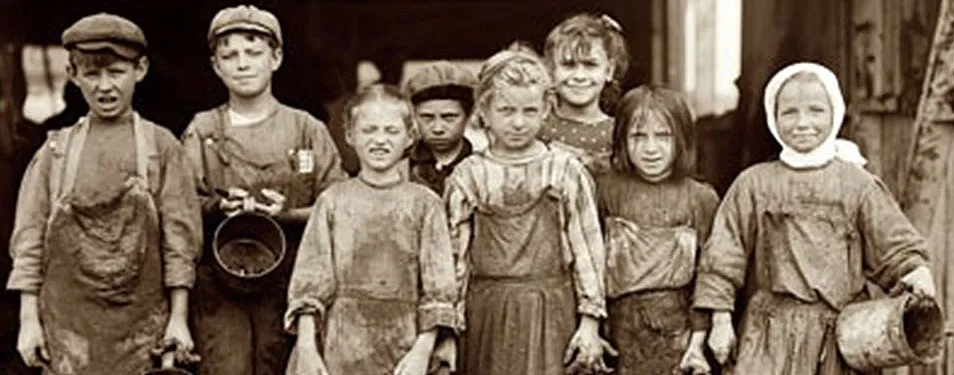
Victorian child labour: quick facts
- Era: Queen Victoria reigned from 1837 to 1901.
- Starting age: Many poor children began work at 5 to 8 years old. Chimney sweeps were sometimes younger.
- Hours: 12 to 14 hours a day was common in mills and mines, six days a week.
- Pay: A few pence a day, a fraction of an adult wage. Girls were paid less than boys.
- Biggest employers: Textile mills, coal mines, farms, domestic service and street trades.
- First major law: The 1833 Factory Act banned under 9s from textile mills.
- Turning point: The 1842 Mines Act banned women, girls and boys under 10 from working underground.
- School: Education became compulsory to age 10 in 1880, and was raised to 12 by 1899.
What jobs did Victorian children do?
Victorian children worked in four main settings: underground, in factories and mills, on the streets, and in homes and fields. Click any job with a link to read its full guide.
Trapper
Sat alone in the dark opening ventilation doors for coal tubs.
Guide coming soon
Hurrier and thruster
Pulled and pushed heavy coal tubs along low tunnels.
Guide coming soon
Scavenger
Crawled under running machines to clear loose cotton.
Piecer
Leaned over spinning machines to join broken threads.
Matchgirl
Dipped and boxed matches made with toxic white phosphorus.
Pottery worker
Carried moulds and turned wheels in hot workshops.
Guide coming soon
Brickfield worker
Carried wet clay and bricks, often for 13 hours a day.
Chimney sweep
Climbed inside narrow chimneys to brush out soot.
Mudlark
Searched the riverbank mud for coal, rope, bones and metal.
Guide coming soon
Crossing sweeper
Swept mud and dung from road crossings for tips.
Guide coming soon
Flower seller
Sold posies and watercress on street corners.
Guide coming soon
Matchseller and hawker
Sold matches, laces and small goods door to door.
Guide coming soon
Newspaper boy
Shouted headlines and sold papers on corners and at stations.
Bootblack
Polished shoes for a penny on busy streets.
Telegraph boy
Delivered telegrams across town on foot or by bicycle.
Guide coming soon
Domestic servant
Scrubbed, fetched coal and water, and cleaned boots.
Farm labourer
Picked stones, weeded and worked in agricultural gangs.
Guide coming soon
Bird scarer
Spent all day in fields scaring crows away from crops.
Guide coming soon
Apprentice
Bound to a master to learn a trade, often for seven years.
Guide coming soon
Why did Victorian employers use children?
Children had worked on farms and in family trades for centuries. What changed in the Victorian era was scale. The Industrial Revolution created mills, mines and factories that needed huge numbers of cheap workers, and children filled the gap.
Employers gave four main reasons for hiring them:
- They were cheap. A child might earn a quarter of an adult’s wage, or less.
- They were small. Children could crawl under machines, squeeze through low coal seams and climb narrow flues.
- They were easy to control. Children rarely complained, and they could be beaten or fined without fear of a strike.
- Families needed the money. Many parents relied on every child’s earnings just to eat. Orphans and workhouse children were often handed to employers with no say at all.
Few people at the start of the era saw anything wrong with it. That began to change in the 1830s and 1840s, when government reports described what working children actually went through.
Coal Mines – Victorian Child Labor
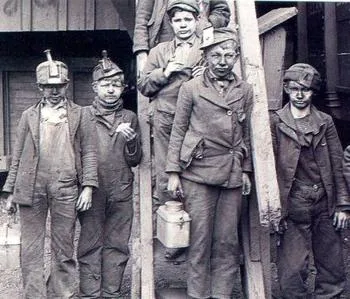
Steam was the number one source of energy during Victorian times. Steam powered everything from trains and steamships to factories that used steam to power their machines. In order to make steam you must have water and heat. To provide heat they had to burn coal, and lots of it. Therefore coal mines used a large part of the Victorian Child Labor force in the 1800’s.
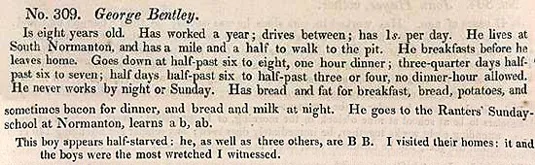
The thought of using children for working the coal mines was very attractive to mining companies. Children were much smaller, enabling them to maneuver in tight spaces and they demanded a lot less pay.
Working Conditions in the Mines
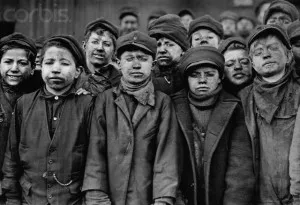
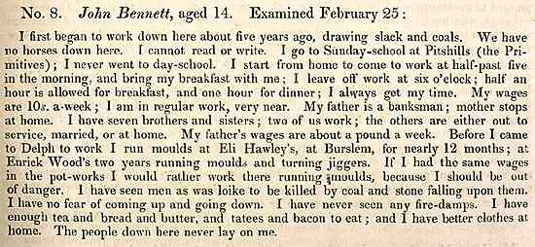
One of the on the job aspects of Victorian Child Labor was the dreadful working conditions. This was particularly magnified in the coal mines. It was dark in the mines making it hard to see and at times would cause permanent problems with sight from the constant strain on the eyes.
Due to a lack of proper ventilation, coal dust was very thick in the air. Considering that Victorian Children would work from 12 to 18 hours a day it is easy to see how respiratory problems could arise. There was constant noise, and rat infestation was very common in the mines.
Some children developed permanent spine deformation from having to walk stooped over constantly. Explosions or cave-ins were an ever-present fear.
Due to the lack of safety awareness in the mines and all of Victorian child labor for that matter, Death was a constant and ever-present danger. The Durham Mining Museum website has several lists of mine disasters with names and ages of the casualties. You can view them yourself by Clicking Here.
Here is a list of laws and safety measures made in the 1800’s. This list was copied directly from The National Archives website.
1781 James Watt’s rotary steam engine invented, this could be used to lower miners down a shaft or to pump water out of a mine.
1794 James Buddle’s exhaust pump was invented. This could draw stale air out of a mine.
1815 Sir Humphrey Davy invented the miners’ safety lamp.
1833 Factory Act, this banned children from working in textile factories under the age of nine. From nine to thirteen they were limited to nine hours a day and 48 hours a week.
1836 Registration of Births, Deaths and Marriages, this enabled factory inspectors to check the ages of children working in factories (only applicable in England and Wales).
1842 Publication of the ‘First Report of the Children’s Employment Commissioners: Mines and Collieries’, which had been prepared by Lord Ashley (later Lord Shaftesbury).
1842 Mines Act, this banned the employment underground of boys under the age of ten and all women and girls. No one under the age of fifteen was to be in charge of machinery.
1844 Factory Act, this classed women as young persons under the age of eighteen and limited the hours of both groups to twelve on weekdays and nine on Saturdays.
1847 The Ten Hour Act, this cut the hours of women and the under-eighteens to ten a day and 58 a week.
1850 The Ten Hour Act, this set the working day for all workers at ten and a half hours. 1867 Factory Act, the legislation was extended to all workshops with more than 50 workers.
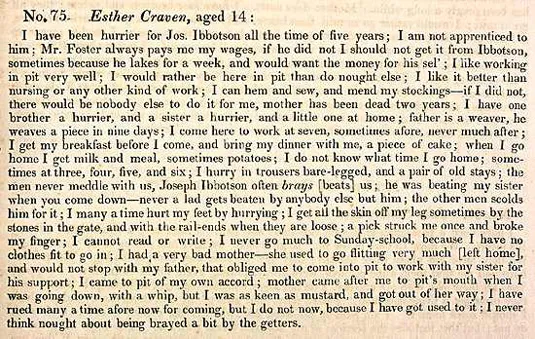
Here are four articles taken from the National Archives. It gives you a rare look into what Victorian Child Labor was really like in the mines.

Chimney Sweeps – Victorian Child Labor
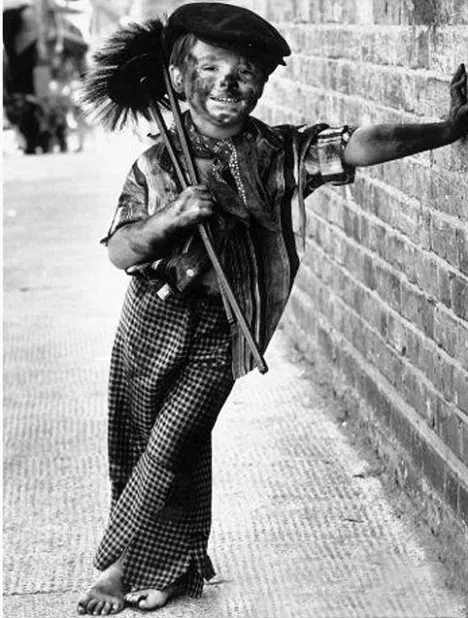
The life of a chimney sweep in Victorian times was nothing like what you see in Mary Poppins. It was a brutal, dreary existence for Victorian child chimney sweeps. Some were as young as 3 years old. Their tiny size made them a popular choice for going down the narrow chimney stacks.
A Victorian Child Chimney Sweep may have been the most dangerous job for children in the 1800’s, especially when the child first started doing the job. Being sent down the chimney the first several times would cause the child’s arms, elbows, legs and knees to be rubbed and scraped raw. At times their knees and elbows looked like there was no skin at all on them. The boss would then wash their wounds with salt water and send them down another chimney without sympathy.
After a time the child would develop calluses making their task a little more bearable. But the dangers of the job were only beginning. Falling was a major fear for chimney sweeps or getting stuck in the stacks also, both could cause death very easily. The constant breathing in of soot caused irreversible lung damage in many children. There were a few reported cases of children getting stuck in chimneys and no one even knowing it, leaving them to die alone from exposure or smoke inhalation or worse. I will leave it to your imagination about how terrifying that must have been. The lifespan of Victorian Chimney sweeps rarely made it to middle age.
Interesting facts about Victorian Child Chimney Sweeps
- Orphans were sometimes taken and put into (for lack of a better word) slavery, and then put back on the street when they grew too big for the chimneys.
- Bosses underfed children so that they would be thin enough to continue going down chimneys.
- Sometimes bosses even kidnapped children to use on the job.
- Children usually outgrew the job around 9 or 10 years of age.
- Children were not even necessary. Sweeping Chimneys could be done more safely and just as well by using brushes.
Victorian Child Labor Laws Against the use of Child Chimney Sweeps
Chimney Sweepers Act of 1788
In 1788 a law against the use of young children under the age of eight as chimney sweeps was enacted. Furthermore, the master sweep had to offer proper clothing as well as decent living conditions and had to allow the children to go to church on Sundays. Before this act children as young as 4 years old were being used as Victorian child labor.
The Chimney Sweepers and Chimneys Regulation Act of 1840
Children as young as six were still being use to sweep chimneys. Under this act it was not legal to make someone or even allow person under the age of 21 to climb up or into a chimney for the purpose of cleaning it.
Chimney Sweepers Act of 1875
In 1875, a 12-year-old boy name George Brewster died in an accident after his Master Sweep made him climb the chimney at Fulbourn Hospital to clean it. A man called Lord Shaftesbury was obviously touched by the story and the spattering of public outcry that followed. He proposed a new Act that would superseded the Chimney Sweepers and Chimneys Regulation Act of 1840.
The Chimney Sweepers Act 1875 made sure that all chimney sweeps had to be registered with the police. Then their work had to be officially supervised. The guidelines of the previous acts would be enforced as well.
Factories and Textile Mills – Victorian Child Labor

Victorian Child Labor was nothing new for Britain or all of Europe for that matter. Children had been used for labor for centuries. It was expected of them to help support their families. During the 1800’s awareness began to grow toward the ills of child labor in factories and elsewhere. Laws were passed and then amendments to those laws were passed until the use of children under the age of 16 years of age was prohibited for full-time work.
But up until these laws were passed child labor in Victorian times was rampant. Factory and mill owners saw children as cheap effective labor. They worked for a mere fraction of what an adult earned. And girls were even cheaper. Because of their size and youthful energy there were jobs that children performed as good or even better than adults. Sometimes you would find more children than adults working at a factory.
At the factories children had no rights. The dirtiest jobs were given to the children. Many times a child would be told to clean under machines even while they were running. There were little or no safety measures put in place in Victorian times so the occurrence of an injury and even death was not uncommon. Victorian child labor consisted of very long working hours. The normal work week would be Monday thru Saturday from 6 A.M. to 8 P.M. Children would be beaten or fined for falling asleep, making a mistake or being late.
The Society for the prevention of cruelty to animals was created in 1824. Which was 67 years before the Society for the Prevention of Cruelty to Children, which was created in 1891.
The National Society for the Prevention of Cruelty to Children (SPCC) – Thomas Agnew
In 1881 Thomas Agnew, a Liverpool businessman visited the New York Society for the Prevention of Cruelty to Children. He was so impressed by what he saw that he went back to England and started the Liverpool Society for the Prevention of Cruelty to Children. This set the ball rolling and the National Society for the Prevention of Cruelty to Children (NSPCC) was created in 1891.
Street children and street trades
In big cities, especially London, thousands of children scraped a living on the streets. Many were orphans or runaways with no home at all. The journalist Henry Mayhew interviewed dozens of them in the 1840s and 1850s for his book London Labour and the London Poor, which is still one of the best records of their lives.
- Mudlarks waded into the Thames at low tide, searching the filthy mud for coal, rope, bones, nails and copper to sell.
- Crossing sweepers cleared a path through the mud and horse dung so well dressed people could cross the road, hoping for a halfpenny tip.
- Flower and watercress sellers were often young girls who got up before dawn to buy stock at the market, then sold it on street corners all day.
- Matchsellers and hawkers sold matches, bootlaces, oranges and other small goods.
- Newspaper boys and bootblacks worked busy streets and stations. Charities such as the Shoeblack Brigade gave some boys uniforms and a regular pitch.
- Errand boys and telegraph boys carried messages and parcels. Telegraph boys wore a uniform and were among the better paid.
Street children were always at risk of illness, cold and hunger. Some turned to pickpocketing and theft, and could be sent to prison or a reformatory if caught. Charities like Dr Barnardo’s homes, opened from 1867, took many of them in. See our Famous Victorians profile of Dr Barnardo for more.
Domestic service and farm work
Child servants
Domestic service was the biggest single employer of girls in Victorian Britain. Many left home at 12 or 13, and sometimes younger, to live in another family’s house as a maid of all work, scullery maid or “tweeny” (a between maid who helped both cook and housemaid). Boys worked as boot boys, pageboys and stable lads. Workhouse girls were often sent out to service as soon as they were old enough.
A young servant was usually first up and last to bed. She lit the fires, carried coal and hot water up flights of stairs, scrubbed floors and blacked the grates, often for 15 hours or more with one afternoon off a week. Read more in our guide to Victorian Servants.
Children on the land
In the countryside, children worked from a very young age:
- Bird scarers stood in fields from dawn to dusk, shouting or rattling wooden clappers to keep crows off the seed.
- Stone pickers and weeders cleared fields by hand, bent double for hours.
- Gleaners gathered the grain left behind after harvest to help feed their families.
- Agricultural gangs moved from farm to farm under a gang master, mainly in eastern England. Children as young as five walked miles each day to the fields. The 1867 Agricultural Gangs Act banned under 8s from public gangs.
Rural children’s attendance at school often dropped sharply at harvest time, and school logbooks from the period regularly record empty classrooms in late summer.
Hours, pay and punishments
How long did Victorian children work?
Before the Factory Acts, a working day of 12 to 14 hours was normal in mills and mines, six days a week, with Sunday off. In busy periods some mills ran from 6am to 8pm or later. Street children worked whenever there was money to be made, often from before dawn until late at night.
How much were Victorian children paid?
Victorian money was counted in pounds, shillings and pence. There were 12 pennies (d) in a shilling (s) and 20 shillings in a pound.
Children typically earned between a few pence a day and 2 or 3 shillings a week, usually a quarter to a third of a man’s wage. Girls earned less than boys doing the same work. Wages were often cut by fines, and some employers paid partly in tokens that could only be spent in the company shop.
How were working children punished?
- Fines for lateness, talking, mistakes or damaged work, taken straight out of wages.
- Beatings with straps, sticks or fists from overseers, especially for falling asleep.
- Dousing in cold water to wake drowsy children.
- Dismissal, which could leave a whole family without enough to eat.
Read more: How Much Were Victorian Children Paid? and How Were Victorian Child Workers Punished?
Victorian child labour laws: a timeline
Change came slowly, through dozens of laws over a century. Reformers such as Lord Shaftesbury (Lord Ashley until 1851) and Richard Oastler campaigned for decades, while many mill and mine owners fought every step. Early laws were often ignored because there were too few inspectors to enforce them.
| Year | Law | What it did |
|---|---|---|
| 1788 | Chimney Sweepers Act | Set a minimum age of 8 for climbing boys (widely ignored) |
| 1819 | Cotton Mills Act | Banned children under 9 from cotton mills, but had no proper inspectors |
| 1833 | Factory Act | Banned under 9s from textile mills, limited 9 to 13 year olds to 9 hours a day, and appointed the first factory inspectors |
| 1840 | Chimney Sweepers Act | Made it illegal for anyone under 21 to climb a chimney |
| 1842 | Mines Act | Banned women, girls and boys under 10 from working underground |
| 1844 | Factory Act | Limited children to 6.5 hours a day with time for school, and required dangerous machinery to be fenced |
| 1847 | Ten Hours Act | Limited women and 13 to 18 year olds in textile mills to 10 hours a day |
| 1850 | Factory Act | Set a 10.5 hour day for women and young people, between 6am and 6pm |
| 1864 | Factory Acts Extension Act | Extended protection to potteries, match making and other trades |
| 1867 | Factory and Workshop Acts | Brought all factories and workshops under the rules |
| 1867 | Agricultural Gangs Act | Banned children under 8 from public farm gangs |
| 1870 | Elementary Education Act | Created board schools so every child had a school place |
| 1875 | Chimney Sweepers Act | Required sweeps to be licensed by the police, ending climbing boys |
| 1878 | Factory and Workshop Act | Banned children under 10 from all factories and workshops |
| 1880 | Elementary Education Act | Made school compulsory from 5 to 10 |
| 1889 | Prevention of Cruelty to Children Act | The “Children’s Charter”, which let police and courts protect children from cruelty |
| 1891 | Factory Act and Elementary Education Act | Raised the minimum working age to 11 and made elementary school free |
| 1899 | Elementary Education Act | Raised the school leaving age to 12 |
| 1901 | Factory and Workshop Act | Raised the minimum age for factory work to 12 |
When did child labour end in Britain?
There was no single date. Child labour faded gradually as two forces worked together: laws that banned young children from work, and compulsory schooling that kept them in the classroom.
By the end of Victoria’s reign in 1901, no child under 12 could legally work in a factory, and every child had to attend school until at least 12. Many children still worked part time before and after school, as errand boys, paper sellers or helpers in family shops.
The 1918 Education Act raised the school leaving age to 14 and ended the “half time” system, where children split their day between school and work. The Children and Young Persons Act 1933 then set firm limits on the jobs children could do and the hours they could work, rules that still shape child employment law today.
Campaigners also changed how people thought about children. In 1881, the Liverpool businessman Thomas Agnew visited a child protection society in New York and returned determined to start one at home. He founded the Liverpool Society for the Prevention of Cruelty to Children in 1883. A year later, in 1884, the Reverend Benjamin Waugh set up the London Society for the Prevention of Cruelty to Children, which became the National Society for the Prevention of Cruelty to Children (NSPCC) in 1889. Remarkably, Britain had a society protecting animals, founded in 1824, 65 years before it had a national one for children.
Frequently asked questions
What age did Victorian children start work?
Many poor children started work between 5 and 8 years old. Trappers in coal mines and climbing boys in chimney sweeping could be even younger, sometimes four or five.
What was the most dangerous job for Victorian children?
Chimney sweeping and coal mining were the most dangerous. Climbing boys could suffocate, fall or burn inside chimneys, while child miners faced cave ins, floods and explosions. Scavengers in textile mills were also badly injured by running machinery. Read more about the most dangerous Victorian jobs for children.
How many hours did Victorian children work?
Before the Factory Acts, 12 to 14 hours a day, six days a week, was normal in mills and mines. The 1833 Factory Act cut the hours of 9 to 13 year olds in textile mills to 9 a day.
Did Victorian children go to school?
Rich children were taught at home or sent to private schools. Most poor children had little or no schooling until the 1870 Education Act created board schools, and school became compulsory from 5 to 10 in 1880. Read more about Victorian schools.
Who stopped child labour in Victorian times?
No single person, but Lord Shaftesbury was the most important campaigner. He pushed for the 1842 Mines Act, the Ten Hours Act and the 1875 Chimney Sweepers Act. Richard Oastler, Michael Sadler, Annie Besant and Dr Barnardo also played major roles.
What did Victorian children do with their wages?
Most handed every penny to their parents to pay for rent, food and fuel. Street children with no family spent their earnings on food and a bed in a lodging house, if they earned enough.
Sources and further reading
- The National Archives: 1833 Factory Act
- legislation.gov.uk: Mines and Collieries Act 1842
- Durham Mining Museum: Huskar Pit disaster
- Henry Mayhew, London Labour and the London Poor (1851 to 1862)
- First Report of the Children’s Employment Commissioners: Mines and Collieries (1842)
Published by Paxton Price on: Mar 2, 2013