Who were the matchgirls?
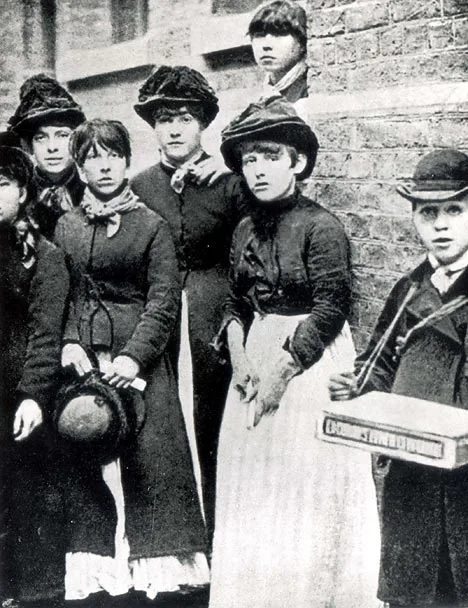
The matchgirls were the women and girls, many still in their early teens, who made matches by hand in the factories of East London. The most famous worked at Bryant & May in Bow, where long hours, harsh fines and a chemical called white phosphorus made the job one of the most dangerous in Victorian child labour.
The worst danger was a disease called phossy jaw, which slowly rotted the bones of the face. In 1888 the matchgirls finally fought back, and their strike became one of the most famous moments in British history.
This guide explains what life was like inside the Bryant & May factory, what the matchgirls were paid, how phossy jaw affected its victims and how the deadly chemical was finally banned.
Matchgirls: quick facts
- Factory: Bryant & May, Fairfield Road, Bow, East London (opened 1861)
- Workforce: Nearly 5,000 people by the 1880s, mostly women and girls of Irish birth or descent
- Pay: Workers under 14 earned about 4 shillings a week, before fines
- Main danger: Phossy jaw, caused by breathing white phosphorus fumes
- Death rate: Around 1 in 5 people who developed phossy jaw died
- The strike: About 1,400 workers walked out in July 1888 and won within weeks
- The ban: White phosphorus matches were not banned in Britain until 1910
Sources: Wikipedia: Matchgirls’ strike, Victorian Web, Hektoen International
The Bryant & May factory in Bow
Bryant & May was started in 1843 by two Quakers, William Bryant and Francis May, as a general merchant business in London. In 1850 they began importing Swedish safety matches, and the trade grew so fast that they bought the British rights and began making matches themselves.
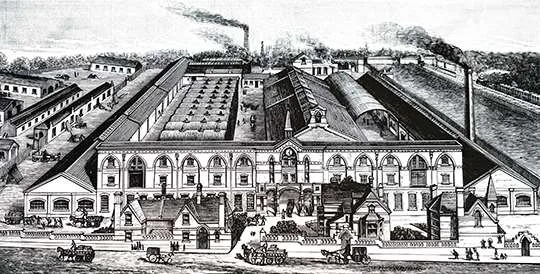
In 1861 they moved to a three acre site on Fairfield Road in Bow, East London. The Fairfield Works became one of the biggest match factories in the world, and by the 1880s it employed nearly 5,000 people.
At first the factory made safety matches, which used the less dangerous red phosphorus on the side of the box. But customers also wanted “strike anywhere” matches, which lit on any rough surface. These needed white phosphorus in the match head, and white phosphorus was cheap. Bryant & May made both.
The business was extremely profitable. Shareholders received dividends of 22.5% in 1885 and 20% in 1886 and 1887, while the workers who made the matches earned a few shillings a week.
The factory building still stands today. It was converted into flats in the 1980s and is now known as the Bow Quarter.
Sources: Wikipedia: Bryant & May, The Genealogist, ENT & Audiology News
A working day at Bryant & May
Most matchgirls came from poor Irish families crowded into the streets around Bow, Bromley and Poplar. Many started at the factory at 13 or 14, and some were younger. Their wages helped keep whole families fed.
In summer the working day ran from around 6.30am to 6pm, with short breaks for meals. Girls who arrived even a few minutes late could be shut out and lose half a day’s pay.
The work was split into different jobs:
- Dippers dipped frames packed with wooden splints into the hot phosphorus paste that formed the match heads. This job was usually done by men and boys rather than the matchgirls. Dippers breathed the most fumes, but the fumes spread through the workrooms, so the girls handling the matches were exposed too.
- Frame fillers packed the splints into the frames ready for dipping.
- Cutters down cut the dried matches from the frames.
- Boxers filled the boxes, working at speed because they were paid by the number of boxes finished.
There was no separate canteen. Workers ate their bread and tea at the same benches where they handled phosphorus, so the poison got onto their food and into their mouths.
Outside the factory, thousands more women and children made matchboxes at home for a pittance, gluing card by candlelight late into the night. Hard as the factory was, these home workers were often even worse off.
Sources: matchgirls1888.org, The Genealogist
Pay, fines and deductions
Matchgirls were paid piece rates, so they earned by the number of boxes or frames they finished rather than by the hour. Girls under 14 took home about 4 shillings a week. Older, faster workers earned more, but rarely enough to live on comfortably.
Even those wages were not safe. Foremen handed out fines for almost anything, and the money came straight out of the pay packet. Workers could be fined for:
- Talking during work
- Having dirty feet (many worked barefoot)
- Dropping matches or leaving burnt ones on the bench
- An untidy workbench
- Being late, even by a few minutes
- Going to the toilet without permission
A single fine could wipe out a large share of a day’s earnings. Some foremen were also violent, and girls who complained risked being sacked.
One story long told in the East End sums up the anger. In 1882 the company is said to have taken money from the workers’ wages to pay for a statue of the Prime Minister, William Gladstone, near the factory. According to the legend, some matchgirls cut their arms and let their blood run onto the statue’s base in protest. Historians are not sure the story is true, but it shows how bitterly the deductions were resented.
The matchgirls did not accept this quietly. They had already gone on strike over low pay and fines in 1881, 1885 and 1886, years before the famous strike of 1888.
Sources: Wikipedia: Matchgirls’ strike, ENT & Audiology News
What was phossy jaw?
Phossy jaw (its medical name is phosphorus necrosis of the jaw) was a disease caused by breathing in white phosphorus fumes. The fumes got into the body through the mouth, especially through rotten teeth, and slowly killed the bone of the jaw.
Doctors had known about it for decades. The first case was diagnosed in Vienna in 1839, and by 1844 the toxic effects of white phosphorus in matches were well established. Charles Dickens wrote about the danger in 1852, nine years before the Bow factory even opened.
Symptoms of phossy jaw
The disease usually appeared after years of exposure, and it got worse in stages:
- Toothache and swollen gums, often mistaken for ordinary tooth trouble
- Loose and falling teeth, with painful abscesses in the gums
- Swelling of the face and a foul smelling discharge of pus
- Dead bone, which began to separate from living bone after about three months
- Destruction of the jaw, often within six months of the first symptoms
Victims were badly disfigured. Many people at the time also said the diseased bone gave off a faint glow in the dark.
Treatment
There was no cure. The only treatment was surgery to cut away the dead bone, and in serious cases the whole jaw was removed, leaving the patient unable to eat normally. Around one in five people with phossy jaw died, often from infection spreading through the body or to the brain.
Workers with bad teeth were most at risk, so some factories checked their workers’ teeth and pulled them out at the first sign of toothache, hoping to save the jaw.
Sources: Wikipedia: Phossy jaw, Victorian Web, matchgirls1888.org
The Matchgirls’ Strike of 1888
In June 1888, the social reformer Annie Besant heard about conditions at Bryant & May. She and Herbert Burrows spoke to workers at the factory gates, and Besant published an article called “White Slavery in London” describing the low pay, the fines, the violent foremen and the risk of phossy jaw.
Bryant & May threatened to sue Besant for libel and tried to make its workers sign a statement saying the article was untrue. When they refused and a worker was sacked, around 1,400 women and girls walked out in early July 1888.
The strike drew huge public sympathy. On 17 July, the directors agreed to the strikers’ demands:
- All fines were abolished
- Workers could take complaints straight to management instead of the foremen
- A separate room was provided for eating, away from the phosphorus
- The workers were free to form a union
The Union of Women Match Makers that followed became the largest union of women workers in the country. The victory inspired unskilled workers across Britain, including the dockers, whose great strike came a year later.
Read the full story: The Matchgirls’ Strike of 1888: How Young Women Took On Their Bosses
Sources: matchgirls1888.org, ENT & Audiology News, Victorian Web
How white phosphorus was finally banned
The 1888 strike improved pay and conditions, but it did not stop Bryant & May using white phosphorus. Phossy jaw carried on for years.
Other countries moved first. Finland banned white phosphorus in matches in 1872, Denmark in 1874 and France in 1897.
In Britain, the Salvation Army took a different approach. In 1891 its founder, William Booth, opened a match factory in Bow that used only safer red phosphorus and paid better wages, to prove matches could be made without poisoning workers. Its “Lights in Darkest England” matches cost more, though, and the factory closed after about a decade.
Factory Acts in the 1890s made employers report cases of phossy jaw, and Bryant & May was fined for neglecting its workers in 1898. The company stopped using white phosphorus around the turn of the century.
The final ban came with the White Phosphorus Matches Prohibition Act of 1908, which took effect in 1910. After that, phossy jaw disappeared from British factories.
Sources: Hektoen International, ENT & Audiology News, The Genealogist, the-east-end.co.uk
Frequently asked questions
How old were the matchgirls?
Most were teenage girls and young women. Many started at Bryant & May at 13 or 14, and some were younger. Older women worked there too.
Why was it called phossy jaw?
“Phossy” was short for phosphorus. The disease was caused by white phosphorus fumes and destroyed the bones of the jaw, so workers called it phossy jaw.
Did phossy jaw make your jaw glow?
People at the time reported that the diseased jawbone gave off a faint greenish glow in the dark, because white phosphorus glows when it reacts with air. It is one of the most repeated facts about the disease.
How much were the matchgirls paid?
Girls under 14 earned about 4 shillings a week. Fines for things like talking or dirty feet were taken from their wages, so many took home much less.
Is the Bryant & May factory still there?
Yes. The Fairfield Road building in Bow was converted into flats in the late 1980s and is now called the Bow Quarter.
When was white phosphorus banned in Britain?
The White Phosphorus Matches Prohibition Act was passed in 1908 and came into force in 1910.
Sources and further reading
- Wikipedia: Matchgirls’ strike
- Wikipedia: Bryant & May
- Wikipedia: Phossy jaw
- Victorian Web: The Matchgirls’ Strike
- matchgirls1888.org: The story of the strike
- ENT & Audiology News: The matchgirls and phossy jaw
- Hektoen International: Phossy jaw
- The Genealogist: A striking story
- The East End: The Match Girls
- Louise Raw, Striking a Light: The Bryant and May Matchwomen and Their Place in History (2009)