The strike that shook Victorian London
In July 1888, around 1,400 women and girls walked out of the Bryant & May match factory in Bow, East London. Most were poor, many were teenagers, and almost nobody expected them to win. Within two weeks, one of the most powerful companies in Britain had given in to every one of their demands.
The Matchgirls’ Strike was a turning point. It showed that unskilled, low paid workers, and young women in particular, could organise and beat their employers. A year later the London dockers followed their lead.
This guide tells the story of the strike day by day: what drove the matchgirls to walk out, the part played by Annie Besant, what they won and how the strike changed working life in Britain. For life inside the factory and the disease that haunted it, see our guide to The Matchgirls: Phossy Jaw and the Bryant & May Factory. For the bigger picture, see Victorian child labour.
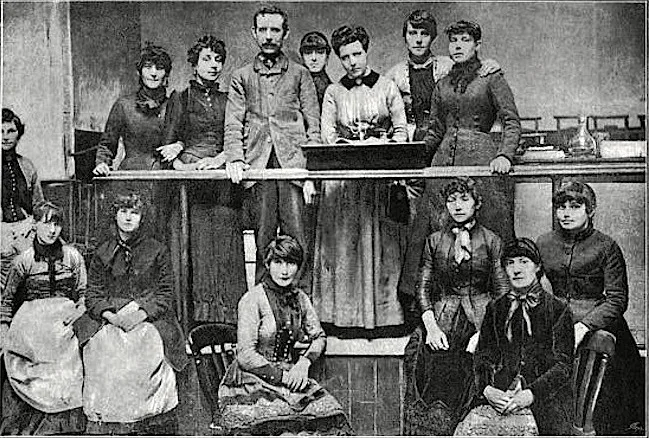
Matchgirls’ Strike: quick facts
- When: July 1888 (the walkout began in the first week of July)
- Where: Bryant & May match factory, Fairfield Road, Bow, East London
- Who: Around 1,400 women and girls, many of them teenagers of Irish descent
- Trigger: The sacking of a worker after staff refused to deny a newspaper article about conditions
- Key figures: Strike leader Sarah Chapman, campaigner Annie Besant and Herbert Burrows
- Length: About two weeks
- Result: Fines and unfair deductions abolished, a separate eating room provided and a union formed
- Legacy: Helped spark the Great Dock Strike of 1889 and the growth of trade unions for unskilled workers
Sources: Wikipedia: Matchgirls’ strike, Matchgirls Memorial
Why were the matchgirls angry?
By 1888 the matchgirls had plenty to be angry about. Days of up to 14 hours, six days a week, were common. A poor harvest that year cut demand and reduced hours, so many workers were earning even less than usual.
Pay was by the piece, and girls under 14 took home about 4 shillings a week. Foremen then took money back through fines:
| Offence | Fine |
|---|---|
| Dirty feet (many could not afford shoes) | 3d |
| Talking or an untidy bench | 3d |
| Being late | 5d |
| Dropping a tray of matches | 6d |
| A burnt match left on the bench | 1s (12d) |
Girls also had to buy their own glue and brushes, and pay the boys who carried frames from the drying ovens. Foremen were often violent and stopped complaints from reaching the managers.
Meanwhile, the shareholders were doing very well. Bryant & May paid dividends of 22.5% in 1885 and 20% in 1886 and 1887.
They had fought before
The matchgirls were not newcomers to protest. In 1871, up to 10,000 match makers, mostly girls and young women, marched on Parliament against a proposed tax on matches, and the tax was dropped the next day. They also went on strike in 1881, 1885 and 1886 over pay and fines. All three strikes failed, but they show the 1888 walkout did not come from nowhere.
Sources: Wikipedia: Matchgirls’ strike, Matchgirls Memorial
Annie Besant and “White Slavery in London”
The spark came from a meeting of the Fabian Society, a socialist group, on 15 June 1888. The reformer Clementina Black spoke about women’s working conditions, and Henry Hyde Champion pointed out that Bryant & May was paying shareholders over 20% while paying its workers starvation wages. The meeting voted to boycott Bryant & May matches.
The next day, the campaigner Annie Besant and her friend Herbert Burrows went to the factory gates and talked to the workers. The girls told them about the long hours, the fines, the low pay and the threat of phossy jaw.
Besant ran a halfpenny weekly paper called The Link. On 23 June 1888 she published an article titled “White Slavery in London”, describing the matchgirls as underpaid and badly treated, and urging readers to stop buying Bryant & May matches.
The company was furious. It threatened to sue Besant for libel and tried to make its workers sign a statement saying the article was untrue. They refused. One girl wrote to Besant to thank her, saying the article was true and that they would not sign, but begged her to keep their names secret because they were frightened of losing their jobs.
Sources: Matchgirls Memorial, Wikipedia: Matchgirls’ strike
The walkout: how the strike unfolded
In the first days of July, Bryant & May sacked a worker, officially for another reason. The workers were sure it was punishment for refusing to sign. Within a day, around 1,400 women and girls had downed tools. One later remembered that it “just went like tinder”: one girl started and the rest followed.
Managers quickly offered to take the sacked worker back, but it was too late. The strikers now wanted the fines and deductions ended too. By 6 July the whole factory had stopped.
That day, a large group of strikers marched to Fleet Street to find Annie Besant. Contrary to the popular story, she had not planned the strike and did not know about it until they arrived. She was worried about so many women losing their wages with no strike fund, but agreed to help. A strike committee was formed, led by women from the factory floor, including Sarah Chapman, Mary Naulls and Mary Cummings.
Timeline of the strike
| Date (1888) | What happened |
|---|---|
| 15 June | Fabian Society meeting votes to boycott Bryant & May matches |
| 16 June | Annie Besant and Herbert Burrows interview workers at the factory gates |
| 23 June | “White Slavery in London” published in The Link |
| Early July | A worker is sacked after staff refuse to deny the article |
| 5 July | Around 1,400 women and girls walk out |
| 6 July | The whole factory stops; strikers ask Besant for help and a strike committee forms |
| 8 July | First mass meeting of strikers on Mile End Waste |
| 10 to 11 July | A deputation of matchgirls meets MPs at the House of Commons |
| 11 July | A strike register opens; over 700 people sign up |
| 14 July | Strike pay is handed out from donated funds |
| 16 July | The London Trades Council meets the Bryant & May directors |
| 17 July | The directors agree to all the strikers’ demands |
Winning public support
The strike became national news. The Star and the Pall Mall Gazette backed the strikers, and even The Times, which had first opposed them, began printing supportive letters. MPs including Charles Bradlaugh and Robert Cunninghame Graham raised the strike in Parliament. Donations poured into the strike fund, and the London Trades Council, which represented skilled unions, agreed to negotiate on the strikers’ behalf.
The pressure told. Bryant was a prominent Liberal and the bad publicity was damaging. Just over two weeks after the walkout, the company gave in.
Sources: Matchgirls Memorial, Wikipedia: Matchgirls’ strike
What did the matchgirls win?
On 17 July the strike committee and the London Trades Council met the Bryant & May directors, who agreed to every demand:
- All fines were abolished.
- Deductions for paint, brushes, stamps and other materials were stopped.
- A 3d payment taken from the packers was restored.
- The boys’ lost pennies were restored, or an equal payment made.
- Workers could take grievances straight to the directors before any action, bypassing the foremen.
- Every striker was taken back.
The company also agreed to provide a separate room for meals, away from the phosphorus, and barrows to carry boxes so girls no longer had to balance them on their heads. When the committee put the deal to the strikers, it was met with wild cheering, and the story was in every paper the next day.
The Union of Women Match Makers
The directors also accepted that the workers would form a union. The Union of Women Match Makers held its first meeting soon after, and Sarah Chapman was elected to its committee. At its first enrolment on 4 August 1888, 468 workers joined.
It quickly became the largest union of women and girls in the country. It later renamed itself the Matchmakers’ Union and opened its doors to men. In 1888 Sarah Chapman went to the International Trades Union Congress in London as one of its delegates, a remarkable step for a young factory worker from Bow.
Sources: Matchgirls Memorial, Wikipedia: Matchgirls’ strike
Who really led the strike?
For most of the 20th century, the strike was told as Annie Besant’s story. In that version, a famous middle class campaigner wrote an article, stirred up the factory and led the girls out.
Historians now tell it differently. Besant’s article mattered, and her publicity, fundraising and contacts helped the strikers win. But she did not call the strike, and she only learned of it when the workers came to her office. The walkout was the matchgirls’ own decision.
The historian Louise Raw, in her book Striking a Light, argues that the matchwomen were experienced, organised and militant long before 1888, as the 1871 march and the earlier strikes show. She puts women like Sarah Chapman back at the centre of the story.
Other historians have noted that the strikers’ main complaints were about pay and fines rather than phossy jaw. The deal they won did nothing to stop the use of white phosphorus, which Bryant & May kept using until 1901.
Sources: Wikipedia: Matchgirls’ strike, Matchgirls Memorial
What happened after the strike?
The dockers and “New Unionism”
Before 1888, trade unions were mostly for skilled male workers. The matchgirls proved that unskilled and poorly paid workers could organise and win. In 1889 East London gas workers formed a union, and that summer the London dockers launched the Great Dock Strike. Many matchgirls had fathers, brothers and husbands working on the docks. Historians call this wave of organising “New Unionism”, and it helped lay the foundations of the modern Labour movement.
The end of white phosphorus
The strike did not end phossy jaw. In 1891 the Salvation Army opened its own match factory in Bow using safer red phosphorus, but its matches cost far more and it closed in 1901, when Bryant & May took it over. That same year, under growing public pressure, Bryant & May announced it had stopped using white phosphorus. The White Phosphorus Matches Prohibition Act of 1908 banned it completely from the end of 1910.
Remembering the matchgirls
- Blue plaque: English Heritage unveiled a blue plaque at the former factory, now the Bow Quarter, on 5 July 2022, the 134th anniversary of the walkout. It was unveiled by the actress Anita Dobson and a great-granddaughter of Sarah Chapman.
- Memorial campaign: The Matchgirls Memorial charity campaigns for a statue and looks after Sarah Chapman’s memory.
- On stage and screen: The 1966 musical The Matchgirls told the story, and the 2022 Netflix film Enola Holmes 2 features a fictionalised version, with Sarah Chapman as a character.
Sources: Wikipedia: Matchgirls’ strike, Matchgirls Memorial
Frequently asked questions
When was the Matchgirls’ Strike?
The strike began in early July 1888, with the main walkout on 5 July. It ended on 17 July, when Bryant & May agreed to the strikers’ demands.
Why did the matchgirls go on strike?
The trigger was the sacking of a worker after staff refused to sign a statement denying Annie Besant’s article about conditions. Behind it lay years of anger over low pay, unfair fines, violent foremen and dangerous working conditions.
Did Annie Besant start the Matchgirls’ Strike?
No. Her article helped create the conditions for the strike and she helped the strikers win, but the workers walked out on their own. Besant only found out when they came to ask for her help.
Who was Sarah Chapman?
Sarah Chapman was a Bryant & May worker who became one of the leaders of the strike committee. She went on to serve on the union’s committee and represented the matchworkers at the International Trades Union Congress in 1888.
How long did the Matchgirls’ Strike last?
About two weeks, from the walkout in the first week of July to the settlement on 17 July 1888.
Was the Matchgirls’ Strike successful?
Yes. The strikers won the end of fines and unfair deductions, the right to take complaints directly to the directors, a separate eating room and the right to form a union. They did not win an end to white phosphorus, which took until 1901 at Bryant & May and 1910 nationally.
Sources and further reading
- The Matchgirls Memorial: The Story of the Strike
- Wikipedia: Matchgirls’ strike
- Victorian Web: The Matchgirls’ Strike
- ENT & Audiology News: The matchgirls and phossy jaw
- Louise Raw, Striking a Light: The Bryant and May Matchwomen and Their Place in History (2009)
- Annie Besant, “White Slavery in London”, The Link, 23 June 1888
Read next: The Matchgirls: Phossy Jaw and the Bryant & May Factory · Back to: Victorian Child Labour