Children in the Victorian brickyards
Every Victorian terrace, mill, railway viaduct and sewer was built from bricks, and many of those bricks were carried by children. In the brickyards of the Midlands and beyond, boys and girls as young as eight hauled lumps of wet clay on their heads for 13 hours a day, walking up to 14 miles between the clay heap and the brickmaker’s table.
Brickyards were outdoor, seasonal and largely unregulated. For years they escaped the Factory Acts that protected children in mills and mines, and conditions were among the worst in Victorian child labour.
This guide explains how bricks were made by hand, the jobs brickfield children did, the loads they carried and the campaign by one former brickyard boy, George Smith of Coalville, that finally brought the law into the brickfields.
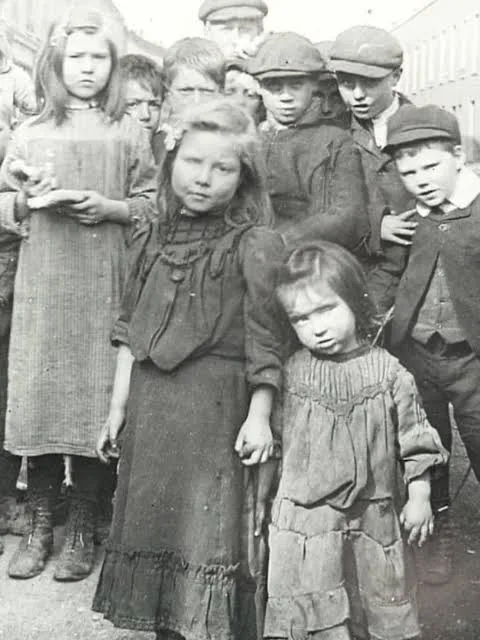
Brickfield children: quick facts
- Where: Brickyards across Britain, especially Staffordshire, Leicestershire, Derbyshire and the Black Country
- Starting age: Often 8 or 9, sometimes younger
- Main job: Clay carrier, taking lumps of wet clay to the brickmaker
- Load: About 40 to 45 pounds (18 to 20kg) of clay per trip, carried on the head
- Distance: Up to 14 miles a day, sometimes more
- Hours: Around 13 hours a day in season; some Derbyshire yards worked children 75 hours a week
- Workers: Boys and girls, alongside many women
- Campaigner: George Smith of Coalville, himself a brickyard child at 9
- Change: An 1871 Act brought brickyards under factory law and inspection
Sources: Wikipedia: George Smith, Old Mersey Times: George Smith of Coalville
Why Victorian Britain needed so many bricks
The Victorian era was a building boom. Towns and cities grew at a staggering rate as people moved from the countryside to work in factories. They needed rows of terraced houses, and the factories, chapels, schools, warehouses, railway stations, bridges and sewers to go with them. Almost all of it was built from brick. Read more about Victorian houses and how Victorians lived.
For most of the century, bricks were still made by hand in small yards dug next to the clay they used. Brickmaking was cheap to start, needed little machinery and relied on a large supply of cheap labour. Children were the cheapest labour of all.
Machines for making bricks were spreading by the later 1800s, but hand making carried on in many yards right through the Victorian period.
How bricks were made and the jobs children did
Hand brickmaking followed the same basic steps in most yards:
- Digging: Clay was dug from a pit next to the yard and left to weather.
- Tempering: The clay was mixed with water and worked until smooth, by treading or in a pug mill (a large tub with turning blades).
- Carrying: Lumps of tempered clay were carried to the moulder’s bench.
- Moulding: The moulder threw each lump hard into a wooden mould, scraped off the extra clay and turned out a wet brick.
- Drying: The wet bricks were carried away and stacked in long rows, called hacks, to dry in the open air.
- Firing: Dried bricks were stacked into a kiln or clamp and burned for several days.
Children worked at almost every stage after the clay was dug:
| Job | Typical age | What they did |
|---|---|---|
| Clay carrier | 8 to 16 | Carried lumps of wet clay on their heads from the clay heap or pug mill to the moulder, all day long |
| Taking off boy or girl | 8 and up | Took each wet brick from the moulder and carried it to the drying ground |
| Brick carrier | 9 and up | Moved dried bricks to the kiln, and fired bricks away again |
| Oven boy | 10 and up | Kept the kiln fires burning, sometimes staying up all night beside the ovens |
In many yards children were not hired by the owner at all. A moulder or ovenman ran his own gang, paid the children out of his own earnings and drove them as hard as he could, because the faster his team worked, the more he earned.
Sources: The Potteries: Brick making in Stoke-on-Trent, The Boy’s Book of Trades (Project Gutenberg), My Primitive Methodists: George Smith of Coalville
Hours, loads and conditions
The work was relentless. A single moulder could turn out around 3,000 bricks a day, and in some yards just two children carried all the clay for those bricks, a total that could reach 12 tons. Reformers who weighed the loads found clay carriers of eight or nine years old carrying lumps of 40 to 45 pounds on their heads, trip after trip.
George Smith gave evidence about one brickyard boy who carried 43 pounds of clay an average of 15 miles a day and worked 73 hours a week. Smith himself remembered that at nine he carried about 40 pounds of clay at a time and moved around 5 tons in a day.
Hours
In the busy season, 13 hours a day was normal, and sometimes longer. In parts of Derbyshire, children worked shifts that added up to 75 hours a week. Because brickmaking stopped in winter, families relied on squeezing as much work as possible out of the summer months.
Conditions
- Weather: Most of the work was outdoors, in rain, mud and summer heat.
- Clothing: Observers described children so thinly dressed they were almost naked, their hair matted with wet clay.
- Exhaustion: By the end of the day children were described as completely worn out, and constant heavy loads could damage growing bodies.
- Punishment: Children who did not keep pace with the moulder were pushed, shouted at or beaten.
- No school: Long hours meant most brickfield children had little or no education.
Victorian reformers were also shocked that boys, girls and adult workers worked closely together with little supervision, which they saw as a moral danger as well as a physical one.
Sources: Old Mersey Times: George Smith of Coalville, Scottish Brick History, My Primitive Methodists: George Smith of Coalville
George Smith of Coalville: the children’s friend
The man who did most to help brickfield children had been one himself. George Smith was born near Tunstall in Staffordshire in 1831, the son of a brickmaker. By the age of nine he was working 13 hours a day in the brickfields, carrying clay on his head.
Smith managed to get an education and worked his way up to manage brick and tile works. In the late 1850s he moved to Coalville in Leicestershire to run a large brickworks. Now he saw the children’s suffering from the other side, and he decided to do something about it.
The campaign
Through the 1860s Smith gathered evidence. He weighed the clay children carried, measured the distances they walked and wrote letter after letter to newspapers and the Home Office. He argued that if the Factory Acts were right for large works, they were right for small brickyards too. In 1871 he published his findings in The Cry of the Children from the Brickyards of England.
Smith was never an MP, but he spent years lobbying them, and the MP A. J. Mundella took up the cause in Parliament.
The price he paid
Smith’s campaign made him deeply unpopular with brickmasters, who relied on cheap child labour. At the end of 1872 he was dismissed from his job at Coalville and fell into severe poverty.
He carried on campaigning anyway. He went on to win a law protecting children living on canal boats, which came into force in 1878, and later worked for the children of Gypsy families. He died in Coalville on 21 June 1895. It is said children crowded round his grave and covered his coffin with white flowers.
Sources: Wikipedia: George Smith, My Primitive Methodists: George Smith of Coalville, Old Mersey Times, Charnwood Forest Geopark
The 1871 Act and what changed
In 1871 Parliament passed an act extending the Factory Acts to brick and tile yards. For the first time, brickyards could be inspected by government factory inspectors, and the work of children and women in them was regulated by law.
The act banned young children from brickyard work and set limits on the hours of older children and young people. Brickmasters who broke the rules could now be prosecuted.
The law did not end child labour in brickyards overnight. Many yards were small, remote and hard to inspect, and some owners ignored the rules. But several other changes followed:
- The 1878 Factory and Workshop Act banned children under 10 from all factories and workshops and tightened the rules across industries.
- Compulsory schooling from 1880 meant children had to be in the classroom rather than the clay pit. Read more about Victorian schools.
- Machines for mixing, moulding and moving bricks gradually replaced the hand labour that children had done.
By the end of the Victorian era, the sight of young children staggering under loads of wet clay was becoming a thing of the past.
Sources: Wikipedia: George Smith, My Primitive Methodists: George Smith of Coalville
Frequently asked questions
What did children do in Victorian brickyards?
Most worked as clay carriers, carrying lumps of wet clay on their heads to the brickmaker. Others carried wet bricks to the drying ground, moved dried bricks to the kiln or helped keep the kiln fires burning.
How much clay did brickyard children carry?
Each load was usually 40 to 45 pounds (about 18 to 20kg). Over a day, a single child could move several tons of clay and walk 14 miles or more.
How old were brickyard children?
Many started at eight or nine years old, and some were younger. Clay carriers were typically between about 8 and 16.
Did girls work in brickyards?
Yes. Girls worked alongside boys as clay carriers, and many adult brickyard workers were women, especially in the Midlands.
Who was George Smith of Coalville?
George Smith was a former brickyard child who became a brickworks manager in Coalville, Leicestershire. His campaign led to the 1871 act that brought brickyards under factory law, and he later campaigned for canal boat children too.
When did child labour in brickyards end?
The 1871 act began to regulate it, and the 1878 Factory and Workshop Act and compulsory schooling from 1880 pushed young children out of the yards. Machines gradually replaced the hand work children had done.
Sources and further reading
- Wikipedia: George Smith (philanthropist)
- Old Mersey Times: George Smith of Coalville, newspaper reports 1866 to 1871
- My Primitive Methodists: George Smith of Coalville
- Scottish Brick History: Working conditions and wages
- The Potteries: Brick making in Stoke-on-Trent
- The Boy’s Book of Trades (Project Gutenberg)
- Charnwood Forest Geopark: George Smith, the Children’s Friend
- George Smith, The Cry of the Children from the Brickyards of England (1871)
- Edwin Hodder, George Smith (of Coalville): The Story of an Enthusiast (1896)